Then
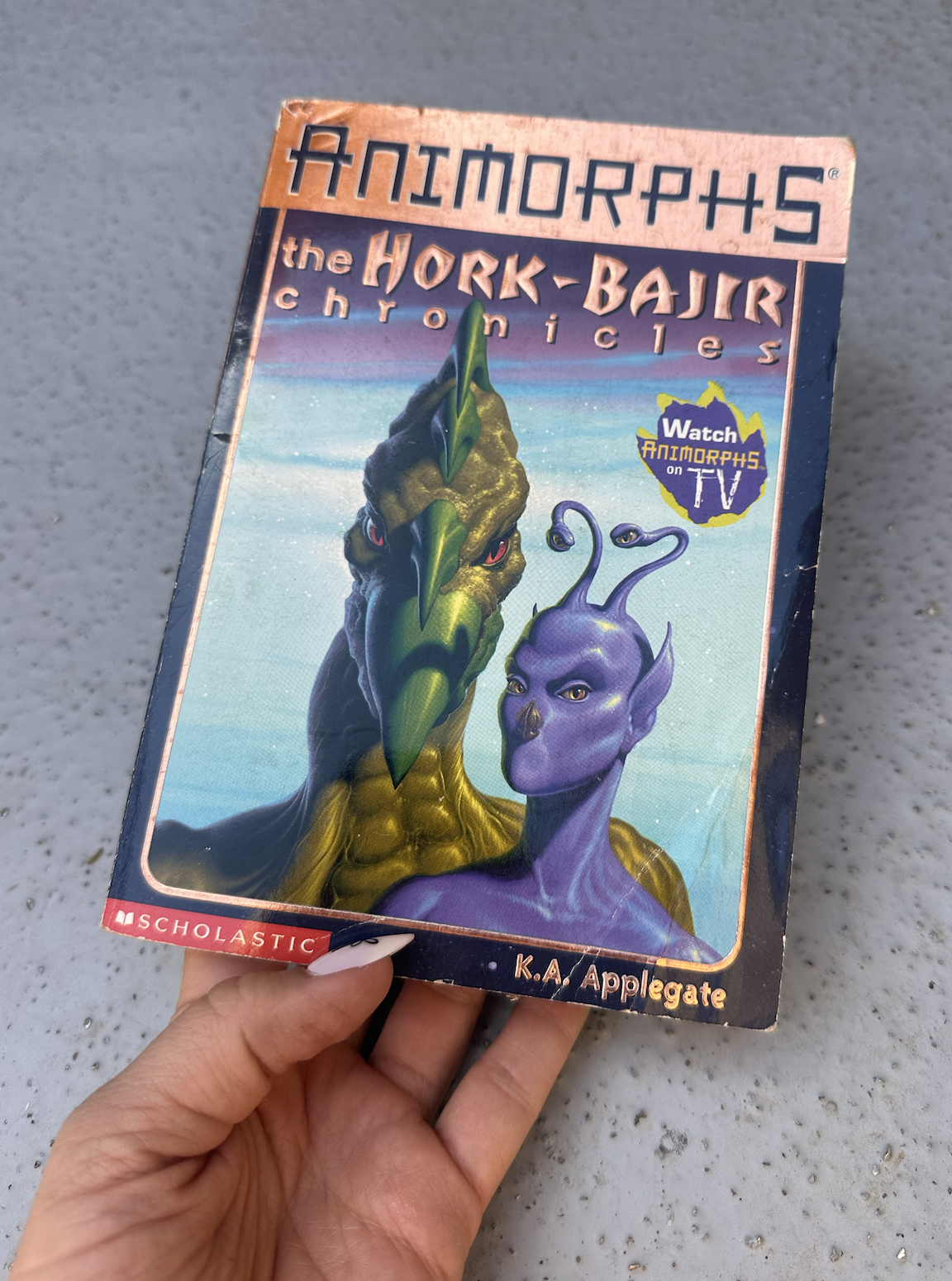
Animorphs was its own world — a complete cosmology of alien species, moral horror, and middle schoolers making impossible choices every single book. The Hork-Bajir Chronicles sat apart from the main series: a prequel told in three voices, tracing how the Hork-Bajir went from peaceful tree-dwellers to Yeerk hosts.
I remember being shocked that Applegate made the Hork-Bajir sympathetic before I even fully understood the word “sympathetic.” They were designed to look scary — bladed limbs, alien faces — and the books kept insisting they were gentle. That cognitive dissonance did something to my brain about appearances and assumptions that I haven’t fully shaken.
Also: Aldrea and Dak Hamee. That relationship hit hard when I was ten. Still does.
Now
What Applegate was doing with Animorphs as a whole — and the Chronicles books in particular — was genuinely unusual for a mass-market children’s series. She was writing about occupation, about collaboration and resistance, about what it costs a people to be enslaved and what it costs to fight back. The Hork-Bajir are a colonized species who have their bodies used as weapons against their will.
That’s not a light premise. She never softened it. The Chronicles doesn’t end happily — it ends honestly, which is harder and better.
The Scholastic “chapter book” packaging completely undersold what was inside. I think that was actually part of what made it work: you picked it up expecting something light, and got something that stayed with you.